News Article
Breaking Barriers; A Case for a New Generation of Women Leaders
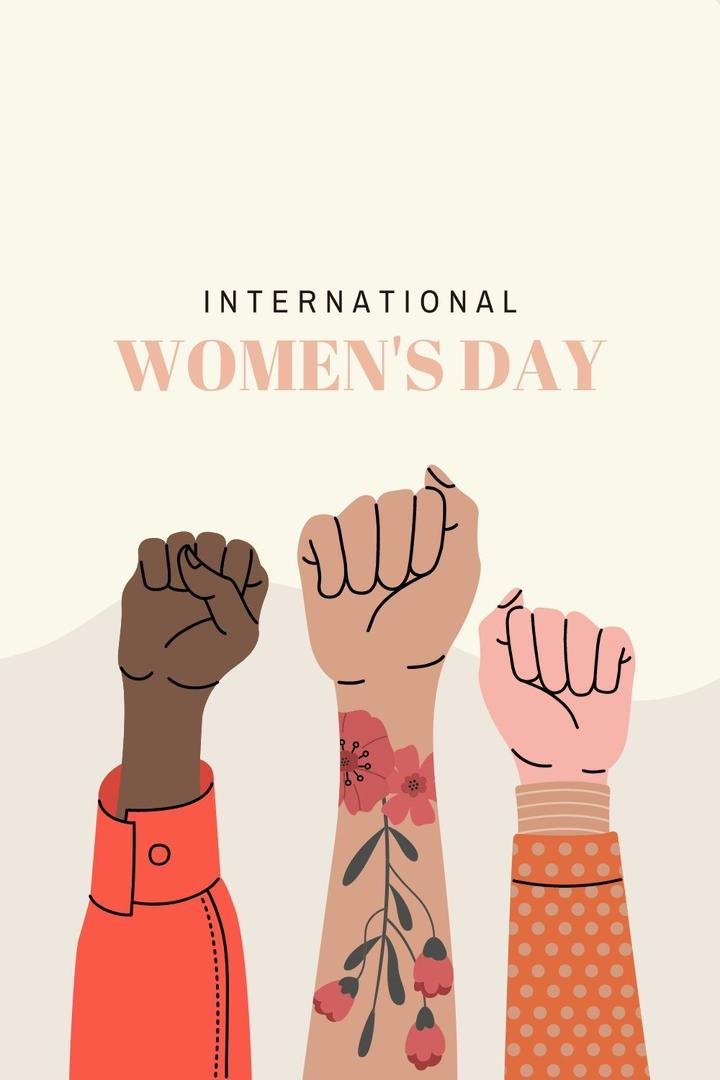
On this International Women’s Day, it is imperative to reflect on our communities’ perspectives on leadership which have long been defined through deeply rooted male-dominated structures. Despite this, the quiet strength of women who carried families through drought, displacement, economic hardship, and social instability have been a stark reality in our communities throughout the civil war and during this period or recovery and societal rebuilding. Mothers negotiated survival in markets, managed households when men were away for work or conflict, made financial decisions with limited resources, and resolved disputes with wisdom and resilience. They were already leading, even if society did not formally recognize them as leaders.
The leadership of women and their role in the survival of our communities at the very crucial local level is manifest throughout the nation and a realty that is acknowledged even by staunchest of critics of women’s involvement in “formal” leadership roles in Somalia.
Yet when leadership titles are distributed, when political seats are allocated, and when decision-making bodies are formed, women remain significantly underrepresented. (Inter-Parliamentary Union, 2026), and in many contexts the numbers are even lower in executive, security, and policy-making spaces. Additionally, in many communities, leadership structures often reflect a persistent imbalance where men dominate the executive, decision-making positions while women are mainly relegated to ceremonial and administrative roles. This gap is not because women lack capacity or competence, but because systems, traditions, and institutional barriers have historically limited their access to power.
For too long, young girls in conservative communities have been subtly taught to shrink themselves, to be supportive rather than directive, accommodative rather than assertive, present but not powerful. Ambition in women is sometimes labeled as rebellion, and confidence is misread as defiance. Vision is occasionally questioned instead of encouraged. These patterns shape perception and opportunity across generations. But leadership is not a gender trait; it is a human capacity. It is about responsibility, accountability, strategic thinking, and service qualities that have been embodied strongly by the women who stood strong when their communities needed them the most and who continue to sustain our communities.
The barriers to women’s leadership are often structural and cultural. Access to decision-making platforms remains limited, especially in clan-level governance, political institutions, and security spaces where real authority is exercised. Economic constraints further restrict participation because leadership requires education, networking, and financial independence; resources that are not equally accessible to everyone. Sometimes inclusion happens only symbolically, where women are appointed to positions to fulfill representation expectations but are not given genuine influence over policy or outcomes. Such tokenism does not transform systems; it only decorates them.
Despite these obstacles, meaningful inclusion of women in leadership is not optional; it is necessary for progress. Societies that integrate women into governance, peacebuilding, and economic decision-making demonstrate stronger institutional outcomes and more durable stability. When women participate fully, perspectives expand, policies become more inclusive, and communities benefit from broader representation. In contexts like ours, where development and security remain priorities, excluding half of the population from leadership weakens our collective potential.
What is required is intentional action. Education and leadership training for girls must be strengthened so that capacity is built early and consistently. Economic empowerment must accompany political empowerment, because access to capital and opportunity directly influences independence and participation. Institutional mechanisms such as representation frameworks must be implemented with accountability so that women not only occupy seats but exercise real authority. Cultural dialogue must continue within families, religious spaces, and community forums to reinforce the understanding that empowering women strengthens society rather than threatens tradition. Visibility and mentorship are equally important, young girls need role models who demonstrate that leadership is attainable and respected.
From the realities that have unfolded in our communities throughout, it is evident that change is possible without destroying cultural identity. Tradition should guide values, but it should not become a barrier to justice, fairness, or progress. Many firsthand accounts detail how women, when given space and opportunity, contribute insight, resilience, and long-term thinking to leadership processes. They do not replace men: they complement institutions and enhance collective decision-making.
The maxim "when women lead, families stabilize; when families stabilize, nations strengthen" holds true. It is not about competition between genders. It is about building systems that reflect the full talent and potential of our society.
As we reflect on International Women’s Day this year, the conversation must move beyond symbolism. It must challenge structural limitations and inspire real transformation. If we genuinely aspire to stability, development, and national advancement, then we must intentionally remove the barriers that prevent women from occupying leadership positions at every level. Women must not only participate in conversations about the future: they must help define it.