News Article
Building Somalia’s Future through Transforming Leadership
Somalia’s most persistent challenge is not a lack of ambition, talent, or vision. It is the absence of a deliberate and credible system for forming leadership that is ethical, capable, and genuinely national in outlook. For too long, leadership has emerged by circumstance rather than preparation, by urgency rather than principle. The result has been fragmented governance, weakened institutions, and a public that often expects little because it has been given little to trust. Yet this moment in Somalia’s history demands something different: a conscious decision to build leadership as a foundation for national renewal.
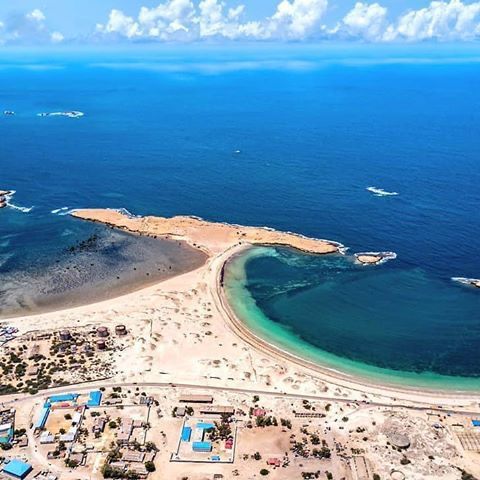
The National Leadership Academy Somalia was created in response to this reality. It is not an abstract idea, nor a symbolic institution. It is a practical, long-term investment in people who will carry responsibility across government, business, and civil society. Based in Kismayo, Jubaland, with a national vision that extends beyond any single region, the Academy reflects a simple belief: that leadership can be learned, strengthened, and held to standards—and that nations that take this seriously are the ones that endure.
Somalia’s leadership gap did not emerge overnight. Years of fragmented governance, clan-centered political incentives, limited civic pathways, and underdeveloped institutions have shaped how authority is acquired and exercised. At the same time, Somalia has over seventy percent of its population under the age of thirty-five and a vast global diaspora with skills, capital, and experience. This contrast is striking. On one side is untapped potential, on the other, a lack of structure to translate that potential into national service. The National Leadership Academy exists precisely to bridge that gap.
At its core, the Academy is built on the understanding that Somalia does not suffer from a shortage of capable individuals, but from the absence of systems that cultivate integrity, competence, and responsibility at scale. Its mission is to identify, equip, and empower leaders who can navigate complexity without losing their ethical compass. Its vision looks beyond immediate political cycles toward a stable, unified Somalia anchored in inclusive governance, a productive economy, and institutions that function because the people within them are prepared to lead.
What distinguishes the National Leadership Academy is its refusal to separate leadership theory from Somali reality. Its approach is grounded in the country’s lived experience while remaining aligned with global standards. Leadership development at the Academy focuses on ethical public leadership, youth continuity and mentorship, Somali values and national identity, economic transformation in key growth sectors, diaspora engagement, and global competence. These are not abstract themes, but practical areas where leadership quality directly determines national outcomes.
The Academy serves leaders across different stages of influence, recognizing that sustainable change requires both renewal and continuity. Emerging leaders are given early exposure to principled leadership and critical thinking. Mid-career professionals strengthen their ability to lead institutions, manage resources, and make accountable decisions. Senior leaders engage through executive education that prioritizes strategic judgment, ethical governance, and performance. Admission is merit-based and competitive, with careful attention to integrity, commitment to national development, and balanced representation across regions and gender. Leadership, in this context, is not inherited or negotiated—it is earned.
Learning at the National Leadership Academy is designed to be rigorous and applied. The curriculum integrates Somali context with international best practice, covering areas such as conflict resolution, strategic leadership, public administration, financial management, entrepreneurship, and climate resilience. Teaching methods emphasize real-world engagement through case studies, experiential learning, mentorship, and community-based work. This ensures that leadership is not reduced to theory but tested through responsibility and practice.
The Academy’s physical presence in Kismayo reflects both strategic intent and national reach. Its campus provides a secure and focused environment with modern learning facilities, accommodation, and shared spaces that encourage reflection and collaboration. Beyond the campus, the Academy is built to operate nationally through satellite hubs and a strong digital learning platform, allowing programs to reach participants across federal member states and beyond. Leadership development, by design, is not confined to one place or one moment.
Governance is central to the Academy’s credibility. It has a full legal and operational independence. Oversight is provided by a merit-based Governing Board of Trustees drawn from academia, civil society, the private sector, the diaspora, and government. Clear separation between governance, executive management, and advisory bodies ensures accountability, transparency, and performance. The Academy is held to the same standards it seeks to instil in its leaders.
The impact of the National Leadership Academy is measured not only by the number of graduates, but by what those graduates go on to build. Its long-term aim is to create a continuous leadership pipeline that strengthens institutions, improves governance, expands economic opportunity, and restores confidence in public service. By serving leaders across federal states and building international partnerships, the Academy positions Somalia not as a passive recipient of external expertise, but as a contributor to regional and global leadership standards.
Ultimately, the National Leadership Academy represents a deliberate choice: to treat leadership as a national responsibility rather than a temporary advantage. It recognizes that lasting stability is not achieved through slogans or short-term fixes, but through people who are prepared, principled, and accountable. In building these leaders, the Academy is doing more than training individuals. It is helping Somalia reclaim the idea that leadership, when done well, can unite, protect, and move a nation forward.