News Article
Drought, Leadership and the Case for a New Generation of Leaders
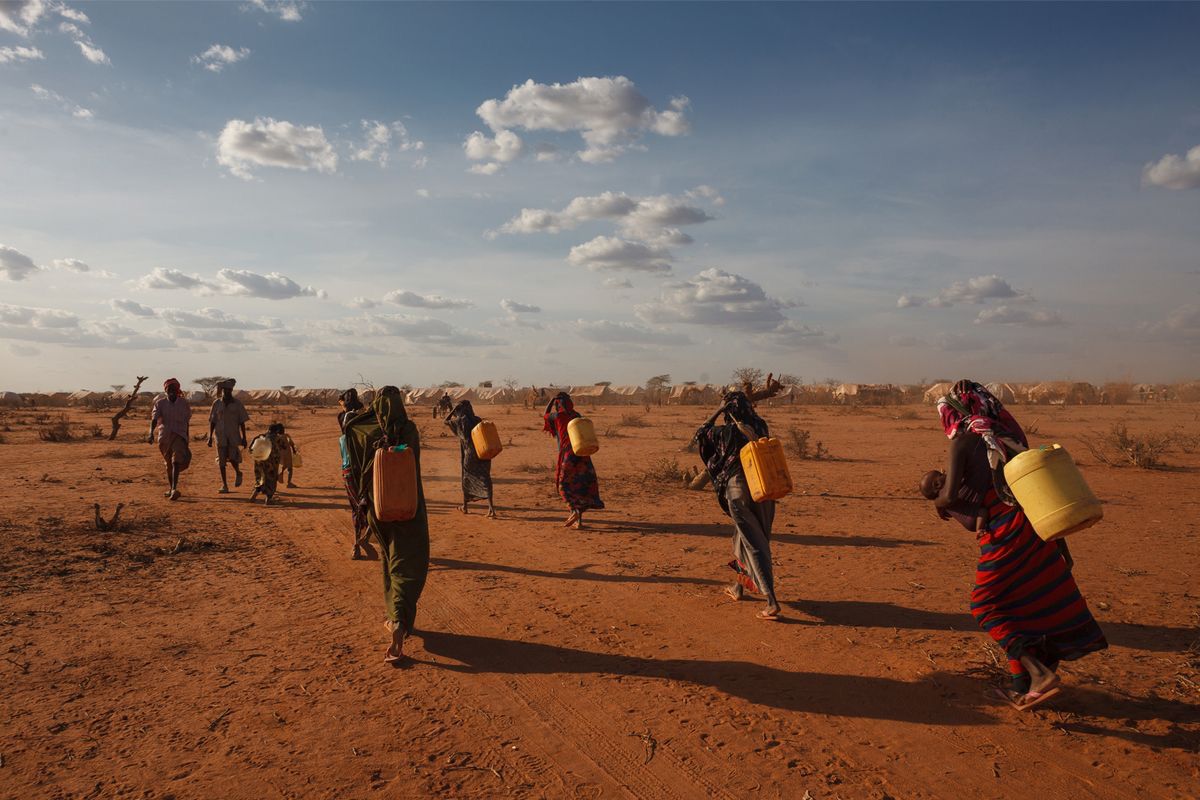
Across Somalia today, the effects of drought are no longer abstract, they are lived realities. Dry land replaces once-fertile fields; pastoralist routes are disrupted, and families are pushed into impossible choices as water sources disappear. Each drought leaves deeper scars than the last, not because Somalia is unfamiliar with climate shocks, but because the systems meant to protect people remain fragile.
Drought is often described as a natural disaster, yet nature alone does not explain the scale of suffering we continue to witness. As leadership expert John Maxwell observed, “Everything rises and falls on leadership.” In Somalia, climate stress has repeatedly exposed weaknesses in leadership, governance, and institutional preparedness. When rainfall fails, strong leadership responds and protect the most vulnerable. Where leadership is fragmented or short-sighted, drought quickly escalates into a humanitarian crisis.
It is within this context that the National Leadership Academy Somalia (NLA) emerges as a critical national response not to the climate itself, but to the leadership gap that allows climate shocks to become national emergencies. Established in Kismayo, the Academy was created on the understanding that sustainable solutions to drought, displacement, and food insecurity begin with capable, ethical, and well-prepared leaders. Climate resilience, in this sense, is as much a leadership challenge as it is an environmental one.
For decades, leadership in Somalia has operated under immense pressure, conflict, political fragmentation, limited institutional capacity, and competing interests. Many leaders assume responsibility without structured preparation, mentorship, or exposure to long-term planning. As a result, responses to drought tend to be reactive rather than preventive, driven by urgency instead of strategy. Former UN Secretary-General Ban Ki-moon warned that “Climate change is not just an environmental issue; it is a threat multiplier.” In fragile governance contexts, that multiplier effect is severe.
Managing drought requires far more than emergency relief. It demands leaders who understand water governance, land use, conflict-sensitive resource management, and the social consequences of displacement. It requires coordination across federal, state and local institutions, as well as trust between leaders and the communities they serve. Without these capacities, even well-funded interventions struggle to deliver lasting impact.
Somalia’s demographic reality makes this challenge even more urgent. With over seventy percent of the population under the age of thirty-five, the country’s future response to climate change will depend on the quality of leadership being shaped today. Investing in leadership development is no longer optional; it is foundational to resilience.
The National Leadership Academy addresses this gap by grounding leadership training in Somali realities while drawing on global best practices. Its programs emphasize ethical leadership, public service, strategic thinking and climate resilience, equipping leaders to think beyond election cycles and immediate pressures. Leadership scholar Ronald Heifetz once noted that “Leadership is about disappointing people at a rate they can absorb.” In the context of drought, this means making difficult but necessary decisions, prioritizing long-term climate solutions over short-term political gain and planning risks that may not yield immediate recognition.
There is also a deep human dimension to this work. Behind every drought statistic is a family, a livelihood, and a sense of dignity at risk. Leadership that is disconnected from lived reality cannot design meaningful solutions.
Somalia does not lack capable individuals or collective resilience. What it has lacked is a sustained, structured pathway for transforming potential into principled leadership. The recurring cycle of drought should serve as a national moment of reflection. Infrastructure matters. Humanitarian aid matters. But without leaders who can think systemically, act ethically, and unite fragmented efforts, progress remains fragile.
The drought confronting Somalia today is a warning, but it is also an opportunity to rethink how leadership is nurtured and how responsibility is understood. The National Leadership Academy represents a long-term investment in breaking the cycle of crisis by addressing its root causes. Climate shocks may be inevitable, but leadership failure is not. Preparing leaders who can anticipate, coordinate, and act with integrity is the bridge between recurring crisis and a resilient future.