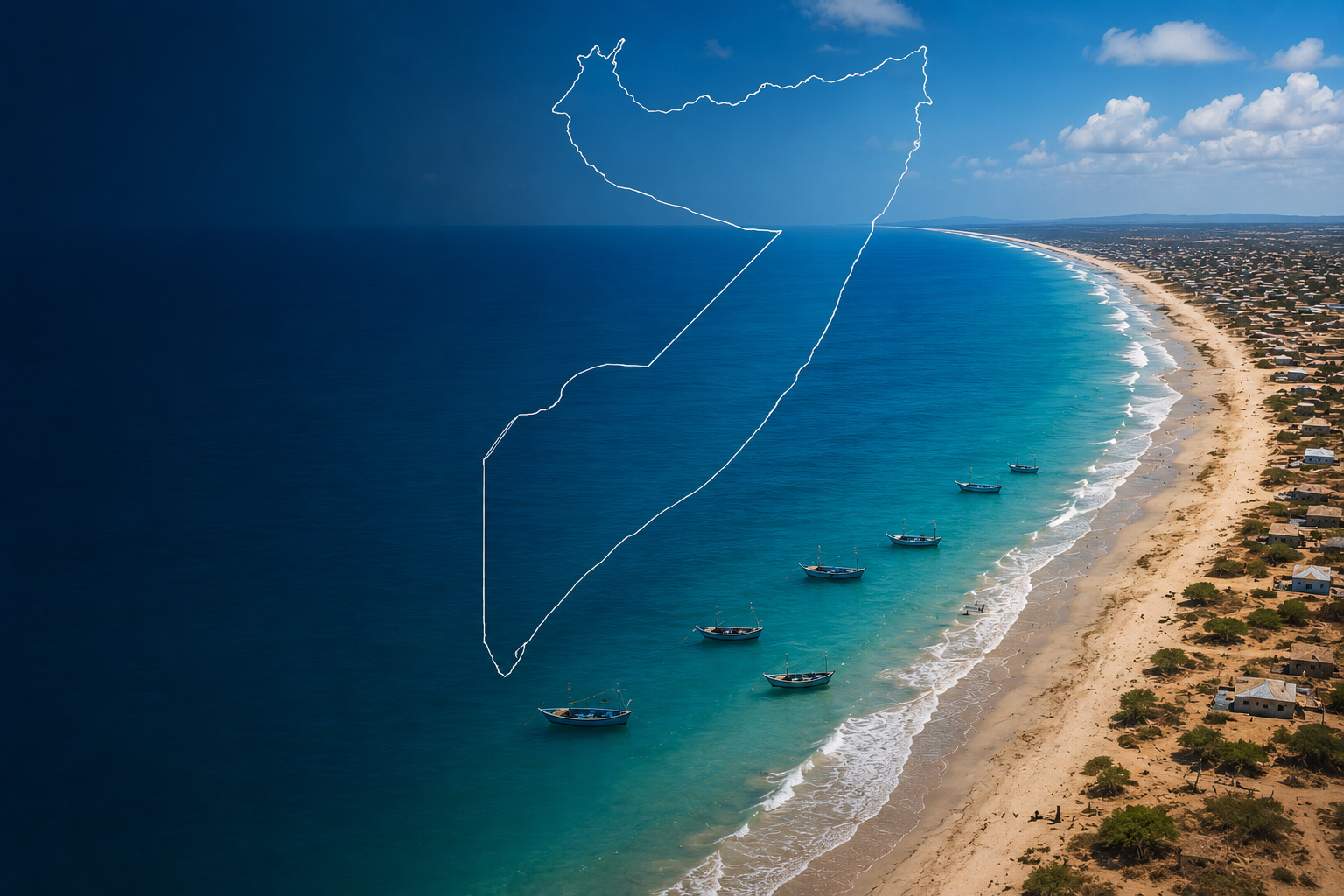
Somalia’s Blue Frontier and the Challenges of National Transformation.
This article examines why Somalia has struggled to convert its extensive maritime resources into a foundation for national development despite its strategic coastline, fisheries potential, and geopolitical significance. It argues that the main obstacles are not geographic or natural-resource limitations, but institutional weakness, fragmented governance, limited technical capacity, and the absence of long-term strategic leadership. Drawing on scholarship on fragile states, maritime governance, and the blue economy, the article shows how weak regulation, illegal fishing, geopolitical competition, and underinvestment in marine-related education have prevented Somalia from harnessing its marine wealth effectively. It further contends that Somalia’s blue economy should be understood not only as an economic opportunity, but also as a test of state capacity, sovereignty, and leadership transformation. In this context, the article highlights the importance of leadership-development institutions such as the National Leadership Academy in helping cultivate the ethical, strategic, and technically informed leadership needed for long-term national renewal. The article concludes that Somalia’s maritime future depends on building accountable institutions, technical expertise, and a coherent national development vision capable of linking marine resources to sustainable prosperity.
Full Article
This article examines why Somalia has struggled to convert its extensive maritime resources into a foundation for national development despite its strategic coastline, fisheries potential, and geopolitical significance. It argues that the main obstacles are not geographic or natural-resource limitations, but institutional weakness, fragmented governance, limited technical capacity, and the absence of long-term strategic leadership. Drawing on scholarship on fragile states, maritime governance, and the blue economy, the article shows how weak regulation, illegal fishing, geopolitical competition, and underinvestment in marine-related education have prevented Somalia from harnessing its marine wealth effectively. It further contends that Somalia’s blue economy should be understood not only as an economic opportunity, but also as a test of state capacity, sovereignty, and leadership transformation. In this context, the article highlights the importance of leadership-development institutions such as the National Leadership Academy in helping cultivate the ethical, strategic, and technically informed leadership needed for long-term national renewal. The article concludes that Somalia’s maritime future depends on building accountable institutions, technical expertise, and a coherent national development vision capable of linking marine resources to sustainable prosperity.
Keywords: Somalia, blue economy, marine resources, maritime governance, fisheries, leadership, national development, Red Sea geopolitics 1 Introduction
Somalia possesses one of the most strategically significant maritime geographies in Africa. Stretching more than 3,000 kilometers along the Gulf of Aden and the Indian Ocean, its coastline lies adjacent to some of the world’s busiest maritime trade corridors connecting Africa, the Middle East, Asia and Europe. Its waters contain substantial fisheries potential, while its coastal position offers opportunities for maritime commerce, logistics, regional trade, and economic integration. Despite these advantages, Somalia remains among the world’s poorest and most aid-dependent countries in the world. This contradiction represents one of the Somalia’s most overlooked national paradoxes. As humanitarian organizations continue operating across the country to address food insecurity, displacement and chronic poverty, large sections of Somalia’s coastline remain economically underdeveloped and strategically neglected. Fisheries historically contributes less than one percent of national GDP before the civil war [21], and decades later the sector remains severely undercapitalized. Marine infrastructure is limited across many coastal communities, regulatory capacity remains weak and opportunities linked to the maritime economy continue to be largely unrealized. The problem, however, Is not merely the existence of untapped resources. Many developing countries possess significant natural wealth without achieving meaningful economic transformation. Somalia’s experience demonstrates that resources alone does not produce prosperity; institutions do. Decades of weak governance and institutional collapse have severely constrained the country’s ability to regulate territorial waters, protect marine resources, and develop coherent maritime strategies. In fragile political environments, valuable national assets often become vulnerable to external exploitation, fragmented regulation, and short-term political competition rather than long-term development. Somalia’s maritime sector reflects this pattern with clarity [10]. These pressures have intensified as geopolitical competition across the Red Sea and the wider Indian Ocean continues to grow. Gulf states, international commercial actors, and regional powers increasingly view ports, shipping routes, and coastal infrastructure as instruments of both economic and strategic influence. Yet, Somalia continues to engage these developments from a position of institutional fragility rather than strategic leverage. Educational priorities also remain poorly aligned with Somalia’s strategic realities. Conversations with educators and repeated engagement with educational institutions suggest a persistent gap between national economic needs and the technical discipline prioritized within the education system. Far greater emphasis is placed on conventional social science and business disciplines than on marine science, fisheries management, marine law, naval security or coastal engineering. The result is a widening gap between the country’s maritime potential and its institutional capacity to manage it effectively. 2 This article argues that Somalia’s marine resources represent more than an untapped economic opportunity; they constitute a broader test of governance, leadership and state capacity. The future of Somalia’s maritime sector will depend not only on investment or infrastructure, but also on the country’s ability to cultivate strategically minded leadership, technically competent institutions, and long-term development thinking. In this regard, initiatives such as the National Leadership Academy may contribute to building the intellectual and institutional foundations necessary for sustainable national transformation. Governed strategically, Somalia’s blue economy could strengthen food security, generate employment, deepen regional integration, and reduce long-term dependence on humanitarian assistance. The greater challenge is whether Somalia can build the institutions, leadership, and national vision necessary to transform it maritime wealth into a foundation for sovereignty, prosperity and long-term stability.
Somalia’s Marine Potential
Any serious discussion of Somalia’s marine potential must begin with geography. Few African countries possess a maritime position as strategically consequential as Somalia’s. The country occupies a critical location near some of the world’s busiest maritime trade routes, linking Africa, the Middle East, Asia, and Europe. This location gives Somalia major geopolitical relevance in regional commerce, maritime security, and global supply chains. As competition intensifies across the Red Sea and the wider Horn of Africa, Somalia’s coastal position increasingly represents both economic opportunity and strategic leverage. The significance of Somalia’s coastline lies not only in its strategic location, but also in its capacity to support sustainable growth through fisheries, maritime commerce, and coastal development. Somali waters contain rich fisheries resources, including commercially valuable tuna and other pelagic species that could support both domestic food security and export-oriented industries [5] Similarly, the National Economic Council of Somalia argues that the country’s blue economy could contribute significantly to employment generation, trade expansion, poverty reduction, and economic diversification if supported by coherent governance and infrastructure development. Historically, Somalia’s fisheries sector has sustained coastal livelihoods despite prolonged periods of conflict and institutional collapse [18]. The continued operation of small-scale fishing systems amid weak state structures illustrates both the resilience of coastal communities and the untapped importance of the country’s marine economy. Beyond fisheries, Somalia’s maritime potential extends to port infrastructure, maritime transport, coastal tourism, renewable energy, logistics, and regional trade integration. If developed strategically, these sectors could help address chronic unemployment, food insecurity, and economic dependency. In many coastal communities, sustained investment in port development, marine education, and regulatory institutions could strengthen livelihoods by reducing dependence on humanitarian assistance and volatile informal markets. More broadly, maritime economies are becoming central to development strategies across Africa and beyond because of their contribution 3 to growth, employment, and regional connectivity [12]. Somalia is well positioned to leverage its long coastline and proximity to critical shipping corridors, as well as nearby regional markets, including Ethiopia. Somalia’s maritime paradox reflects a broader pattern found in many fragile states: strategic assets remain underutilized when institutions lack capacity, coordination, and long-term vision. Limited regulatory support, underinvestment in coastal infrastructure, and weak enforcement have constrained the sector’s development [10]. In addition, decades of illegal, unreported, and unregulated fishing in Somali waters may have depleted fish stocks and damaged marine habitats without adequate public awareness or state response. This governance deficit undermines both economic opportunity and marine sustainability. These realities underscore the importance of cultivating a new generation of strategically minded leaders capable of translating maritime potential into coherent development policy. In this sense, the marine environment is more than an untapped economic sector; it reveals broader national weaknesses in leadership, institutional capacity, and long-term planning. Whether Somalia succeeds in transforming its marine resources into sustainable prosperity will therefore depend largely on its ability to build competent institutions and invest in technical expertise. Without meaningful institutional reform and long-term planning, the country risks remaining trapped in recurring cycles of underdevelopment and external dependency.
Why Somalia Failed to Harness Its Marine Wealth
Somalia’s inability to transform its vast maritime resources into a sustainable driver of national development cannot be explained by geography, resource scarcity, or a lack of strategic opportunity. On the contrary, Somalia possesses one of the most strategically significant coastlines in Africa, positioned near critical trade routes linking the Red Sea, the Gulf, the Horn of Africa, and Asia. The deeper challenge lies in the prolonged weakness of state institutions, fragmented governance systems, inadequate technical capacity, and the absence of long-term leadershipdevelopment frameworks. Somalia’s marine underdevelopment therefore reflects not only an economic failure, but also a broader crisis of governance and incomplete state building. This pattern is not unique to Somalia. Development scholars have long argued that natural wealth alone does not produce prosperity. In Why Nations Fail, [1] states achieve sustainable economic transformation not because of resource abundance, but because of the strength and inclusiveness of their political and economic institutions. Where institutions remain dysfunctional, extractive, or exclusionary, national assets often become sources of competition, external interference, and economic uncertainty rather than engines of development. Somalia’s maritime sector illustrates this dilemma clearly. The collapse of the state during the civil war fundamentally disrupted the 4 country’s ability to regulate territorial waters, protect marine resources, and coordinate long-term economic planning. These institutional weaknesses have unfolded alongside intensifying geopolitical competition across the Red Sea and the Horn of Africa. Somalia’s prolonged fragility produced a political order characterized by weak institutions, competing centers of power, and limited administrative reach beyond major urban areas. Ongoing tensions between the Federal Government of Somalia (FGS) and the Federal Member States (FMS) over authority, resource management, and constitutional arrangements have further weakened policy coordination across key sectors. The decentralization process continues to grapple with unresolved questions of institutional responsibility and administrative coherence [8]. In the maritime sector, this governance vacuum has hindered fisheries regulation, undermined coastal administration, and constrained the state’s ability to manage marine resources in the national interest. The consequences of this governance collapse have been especially visible along Somalia’s coastline. Limited maritime enforcement capacity and the absence of effective naval institutions enabled the expansion of illegal, unreported, and unregulated fishing by foreign vessels operating in Somali waters. Although illegal foreign fishing is often discussed primarily as an environmental or economic issue, its implications in Somalia have been much broader. Foreign illegal fishing has undermined marine sustainability and local livelihoods while also contributing to insecurity and conflict dynamics [10]. In practice, these challenges discourage long-term investment, weaken regulatory consistency, and reduce the state’s ability to negotiate effectively with external actors. Yet Somalia’s marine challenges are not solely political; limitations in human capital and technical expertise also play a major role. Sustainable marine development requires specialized knowledge in marine science, fisheries, economics, naval security, maritime law, logistics management, and coastal engineering. Nevertheless, national educational priorities remain insufficiently aligned with these sectors. Universities and colleges continue to produce large numbers of graduates in conventional social science and business disciplines, while deliberate investment in maritime and technical fields remains limited. This imbalance reflects a broader development challenge: the absence of institutions capable of linking education policy to long-term economic strategy, national security, and state building.
Foreign Interests and Maritime Geopolitics
Somalia’s maritime challenges cannot be understood solely through the lens of domestic governance failure or economic underdevelopment. Over the past several decades, the country’s coastline has become increasingly entangled in geopolitical competition across the Red Sea, the Gulf of Aden, and the wider Indian Ocean. As global trade routes face growing vulnerability from regional instability and maritime disruption, Somalia’s coastal geography has acquired renewed 5 strategic relevance for both regional and international actors. Yet despite occupying one of the world’s most consequential maritime corridors, Somalia continues to engage these developments from a position of institutional fragility rather than strategic leverage. The geopolitical importance of Somalia’s coastline is closely tied to its proximity to critical maritime chokepoints linking Europe, Asia, the Middle East, and Africa. The Bab al-Mandab remains one of the world’s most sensitive trade corridors because of its central role in global energy transport and maritime commerce. The strategic importance of this waterway has elevated the significance of ports and maritime security across the Horn of Africa [11], including Somalia’s coastal infrastructure. As regional instability continues to threaten shipping and energy flows, maritime zones adjacent to Somalia are attracting renewed attention from states seeking commercial access, naval presence, and logistical influence. This growing strategic interest has intensified rivalry among Gulf states and other regional actors competing for influence across the Horn of Africa. Furthermore [20], Red Sea geopolitics reflects changing patterns of security interdependence linking the Gulf and the Horn through military cooperation, port investments, trade agreements, and political alliances. Countries such as the United Arab Emirates, Qatar, Saudi Arabia, and Türkiye increasingly view ports, infrastructure, and maritime access not only through a commercial lens, but also as instruments of geopolitical influence and regional power projection. The political sensitivity surrounding maritime access and port infrastructure became especially visible following Ethiopia’s controversial port agreement with Somaliland. The arrangement generated significant diplomatic tensions between Somalia and Ethiopia, with the Federal Government of Somalia viewing it as a violation of national sovereignty and territorial integrity [20]. Beyond the immediate dispute, the episode revealed the growing geostrategic importance of maritime access in the Horn of Africa. For landlocked Ethiopia, access to ports represents both an economic and strategic necessity. For Somalia, however, external agreements involving coastal territory intersect with broader concerns about sovereignty, territorial authority, federal fragmentation, and regional influence. At the same time, Somalia’s weak maritime governance has enabled external exploitation of its marine resources. Illegal, unreported, and unregulated (IUU) fishing by foreign vessels is a clear example of how governance vacuums expose fragile states to outside extraction. While illegal fishing affects many developing coastal countries, its impact in Somalia has been especially severe because of decades of weak naval enforcement and limited fisheries regulation. Foreign illegal fishing in Somali waters has caused not only economic losses and environmental damage [10], but also local grievances and insecurity in coastal communities. Their findings challenge narrow views of maritime insecurity that focus only on criminality while overlooking the governance failures and external pressures driving coastal instability. Piracy in Somalia, for example, is often framed mainly as a criminal or terrorist issue. However, scholars argue that it emerged within a broader context of institutional collapse, economic marginalization, illegal fishing, and weak governance. Scholars [3] also note that piracy and maritime insecurity in the northwestern Indian Ocean evolved in part from governance vacuums and prolonged instability along the Somali coast. 6 Somalia’s maritime environment is also part of a broader transformation in global maritime security. Over the years, maritime security has evolved into a geopolitical issue shaped not only by piracy and criminality, but also by state competition, trade vulnerability, and strategic control over sea lanes [9]. In Somalia’s case, this means that coastal governance cannot be treated as a narrow technical matter. It is inseparable from questions of sovereignty, regional order, and national development. Unless Somalia strengthens its maritime institutions and develops a coherent long-term strategy, external powers will continue to shape the future of its coastline more decisively than Somali authorities themselves.
Why the Blue Economy Matters for Somalia’s Future Development
Somalia’s future cannot remain indefinitely tied to cycles of humanitarian dependence, unsettled politics, and crisis management. For more than three decades, the country has faced overlapping pressures, including armed conflict, institutional collapse, climate-induced food insecurity, economic stagnation, and mass displacement. These interconnected crises have weakened state capacity, disrupted livelihoods, and deepened vulnerability across both rural and urban communities. Yet Somalia’s marine resources offer an alternative national pathway—one that could contribute not only to economic recovery, but also to food security, social resilience, and long-term stability. The urgency of building sustainable economic alternatives has become clearer as climate pressures intensify across the Horn of Africa. Somalia remains among the countries most vulnerable to climate-related shocks, including prolonged droughts, floods, environmental degradation, and livestock losses. These disruptions continue to undermine agricultural production and pastoral livelihoods that have historically sustained large segments of the population. Strong evidence suggests that climate-related insecurity in Somalia is closely linked to weakened livelihoods, displacement, resource competition, and fragile peacebuilding environments [7]. Climate vulnerability in Somalia therefore represents more than an environmental concern; it has become a national governance and security challenge. The consequences of these overlapping pressures are increasingly visible in patterns of displacement and food insecurity across the country. As seen through remote-sensing analysis [15], climate-induced displacement continues to reshape humanitarian and demographic conditions across Somalia, particularly in drought-affected regions. There is a strong relationship between food-price inflation, armed conflict, climate variability, and acute malnutrition [14]. Together, these findings show how insecurity, environmental stress, and economic instability reinforce one another, creating cycles of humanitarian dependence that emergency aid alone cannot reverse. 7 These conditions raise a broader national question: how can Somalia build more resilient and productive economic systems capable of reducing long-term dependency and vulnerability? In this context, the blue economy should be understood as more than a commercial sector; it represents a potential foundation for long-term national resilience. Across Africa, sectors such as fisheries, maritime transport, coastal tourism, renewable energy, logistics, and ocean governance are increasingly viewed as drivers of economic diversification. The National Economic Council’s 2022 blue economy framework likewise presents the sector as a strategic avenue for employment generation, trade expansion, and broader economic transformation. Sustainable investment in marine industries could create new pathways for livelihoods, entrepreneurship, and regional trade integration, especially in a country where youth unemployment and economic exclusion remain widespread. The blue economy also carries important implications for food security, sovereignty, and national security. Sustainable fisheries development, fish-processing facilities, cold-storage infrastructure, and expanded coastal markets could strengthen domestic food systems while generating income for vulnerable coastal communities. At the same time, Somalia’s maritime domain remains vulnerable to illegal fishing, weak enforcement, and external geopolitical competition because of fragmented governance and limited institutional capacity. A stronger Somali economy therefore requires more than financial investment. It demands established maritime institutions, regulatory enforcement, coastal security, and coordinated national policy capable of protecting marine resources from exploitation. As recent scholarship on African blue economy strategies emphasizes, long-term gains depend on integrated planning, institutional coordination, sustainability, and technical expertise. For Somalia, the blue economy cannot be reduced to donor-driven programming or isolated commercial projects; it must form part of a national strategy linking economic diversification, environmental sustainability, institutional reform, and state building.
The Role of the National Leadership Academy in Leadership Transformation
Somalia’s ability to harness its marine resources and broader economic potential will depend not only on infrastructure investment, but also on the quality of its leadership and institutions. Decades of conflict, corruption, and institutional collapse have weakened public trust and disrupted the country’s leadership pipeline across government and public administration. In fragile states, development failure is often linked less to resource scarcity than to weak governance systems and limited institutional capacity. Somalia’s recovery therefore requires the cultivation of ethically grounded, technically competent, and strategically informed leaders capable of guiding long-term national transformation. Within this context, the National Leadership Academy (NLA) represents an important institutional initiative. As a flagship institution for leadership development and training, the NLA seeks to strengthen national leadership through policy education, mentorship, technology-enabled learning, and ethical governance training. Its significance lies not simply in 8 training individuals, but in helping to build a governance culture grounded in accountability, strategic thinking, and institutional effectiveness. Scholars of fragile-state governance argue that successful reform depends not only on formal institutional design, but also on leadership capacity and organizational culture. State-building efforts often falter when reform agendas neglect the political [6], and institutional conditions needed to manage change. Additionally, sustainable local economic development depends heavily on governance systems capable of coordination, trust building, and effective implementation [16]. Somalia’s governance challenges, including weak administrative capacity, fragmented institutions, and recurring political crises reflect many of these realities. In this sense, leadership development should be understood as a practical requirement for institutional reform rather than a peripheral concern. Leadership transformation in Somalia is not exclusively a technical exercise; it is also an ethical one. As a Muslim-majority society, Somalia possesses strong traditions that emphasize trust (amaana), accountability, and social responsibility. Decades of civil war, displacement, looting, and political fragmentation have weakened the social foundations of these values and eroded norms of fair resource sharing and public stewardship. For this reason, anti-corruption efforts cannot rely on legal reform alone. They also require leadership models grounded in ethical development and value-based governance. In this regard, the NLA’s emphasis on anti-corruption leadership training and technology-enabled learning reflects an important effort to reconnect technical competence with public responsibility. Leadership development should therefore be viewed not merely as elite training, but as part of a broader national transformation process. Transformative leadership involves preparing people who can strengthen institutions, think critically, and pursue long-term societal change. The NLA could help Somalia cultivate a new generation of leaders equipped with the strategic vision, technical awareness, and ethical responsibility necessary to improve governance, support national development, and translate the country’s natural wealth into long-term economic stability and resilience. If Somalia is to transform its blue frontier into a foundation for national renewal, leadership formation must become a central pillar of state building.
Conclusion
Somalia’s marine wealth is not merely an underused economic asset; it is a test of the country’s capacity for governance, coordination, and long-term strategic thinking. The central challenge is not the absence of opportunity, but the weakness of the institutions needed to protect, regulate, and develop that opportunity in public interest. If managed effectively, the blue economy could strengthen food security, expand employment, deepen regional trade, and reduce dependence on external assistance. 9 But those outcomes will require more than infrastructure or donor support alone. They will depend on coherent policy, technical expertise, accountable institutions, and a new generation of leaders capable of linking maritime development to national transformation. This blue frontier can become a foundation for renewal—but only if it is matched by serious investment in governance and leadership. Somalia’s coastline has long attracted external interests because of its strategic value and probably lack of enough protection. Its long-term future lies with Somali’s national vision to transform this wealth into a foundation for prosperity and long-term stability.
References
1. Acemoglu, D., & Robinson, J. A. (2012). Why nations fail: The origins of power, prosperity, and poverty. Crown Publishers.
2. Al Jazeera. (2024, January 6). Why is Somalia angry about neighbouring Ethiopia’s new port deal? Al Jazeera.
3. Alsawalqa, R. O., & Venter, D. (2022). Piracy and maritime security in the north-western Indian Ocean: From the Gulf of Oman to the waters off the Somali coast. Insight on Africa, 14(1), 88–103.
4. Brinkerhoff, D. W. (2011). State fragility and governance: Conflict mitigation and subnational perspectives. Development Policy Review, 29(2), 131–153.
5. Cashion, T., Glaser, S. M., Persson, L., Roberts, P. M., & Zeller, D. (2018). Fisheries in Somali waters: Reconstruction of domestic and foreign catches for 1950–2015. Marine Policy, 87, 275-283.
6. De Weijer, F. (2012). Rethinking approaches to managing change in fragile states. Netherlands Institute of International Relations Clingendael.
7. Eklöw, K., & Krampe, F. (2019). Climate-related security risks and peacebuilding in Somalia. Stockholm International Peace Research Institute (SIPRI).
8. Elmi, A. A. (2020). Decentralization options for Somalia. Heritage Institute for Policy Studies.
9. Germond, B. (2015). The geopolitical dimension of maritime security. Marine Policy, 54, 137–142.
10. Haas, B., Mackay, M., Novaglio, C., Fullbrook, L., Murunga, M., Sbrocchi, C., & Armsworth, P. (2019). Foreign illegal fishing in Somali waters perpetuates conflict. Frontiers in Marine Science, 6, 704.
11. Kassim, M. G., & Osman, A. I. (2026). The impact of Bab al-Mandab and the Strait of Hormuz on Somalia’s ports and maritime security. Journal of Transportation Security, 19(1), 7.
12. March, A., Bennett, M., Germishuizen, M., Evans, T., & Failler, P. (2024). The status of blue economy development in Africa. Marine Policy, 165, 106205.
13. Mishra, P., & Maiko, S. (2017). Combating corruption with care: Developing ethical leaders in Africa. Africa Journal of Management, 3(1), 128–143.
14. Mohamed, J., Abdi, M. J., Mohamed, A. I., Muhumed, M. A., Abdeeq, B. A., Abdi, A. A., & Ali, D. A. (2024). Predicting the short and long term effects of food price inflation, armed conflicts, and climate variability on global acute malnutrition in Somalia. Journal of Health, Population and Nutrition, 43(1), 68.
15. Momeni, R., Bircan, T., King, R., & Santos, E. Z. (2024). Deciphering climate-induced displacement in Somalia: A remote sensing perspective. PLOS ONE, 19(8), e0304202.
16. Montero, S., & Chapple, K. (2018). Fragile governance and local economic development. Routledge.
17. Ogembo, A., & Ichani, X. F. (2024). The centrality of blue economy resources in the Kenya-Somalia maritime border dispute. Path of Science, 10(8), 2001–2013. 10
18. Pollnac, R. B., Bavinck, M., Monnereau, I., & Failler, P. (2018). Chaos, conflict and change: The reemergence and evolution of fishery governance in the small-scale fisheries of Somalia. Ocean & Coastal Management, 162, 193–201.
19. Van Oord, L. (2013). Towards transformative leadership in education. International Journal of Leadership in Education, 16(4), 419–434.
20. Verhoeven, H. (2018). The Gulf and the Horn: Changing geographies of security interdependence and competing visions of regional order. Civil Wars, 20(3), 333–357.
21. World Bank. (2024). Somalia sustainable fisheries and blue economy development project. World Bank